
Vallor vs.
Vallor vs Spellbook: Drafting Tool vs Portfolio Intelligence
Spellbook drafts and reviews contracts in Microsoft Word. Vallor reads, monitors, and answers across every signed contract. Compared on scope, deployment, post-signature management, integrations, and pricing.

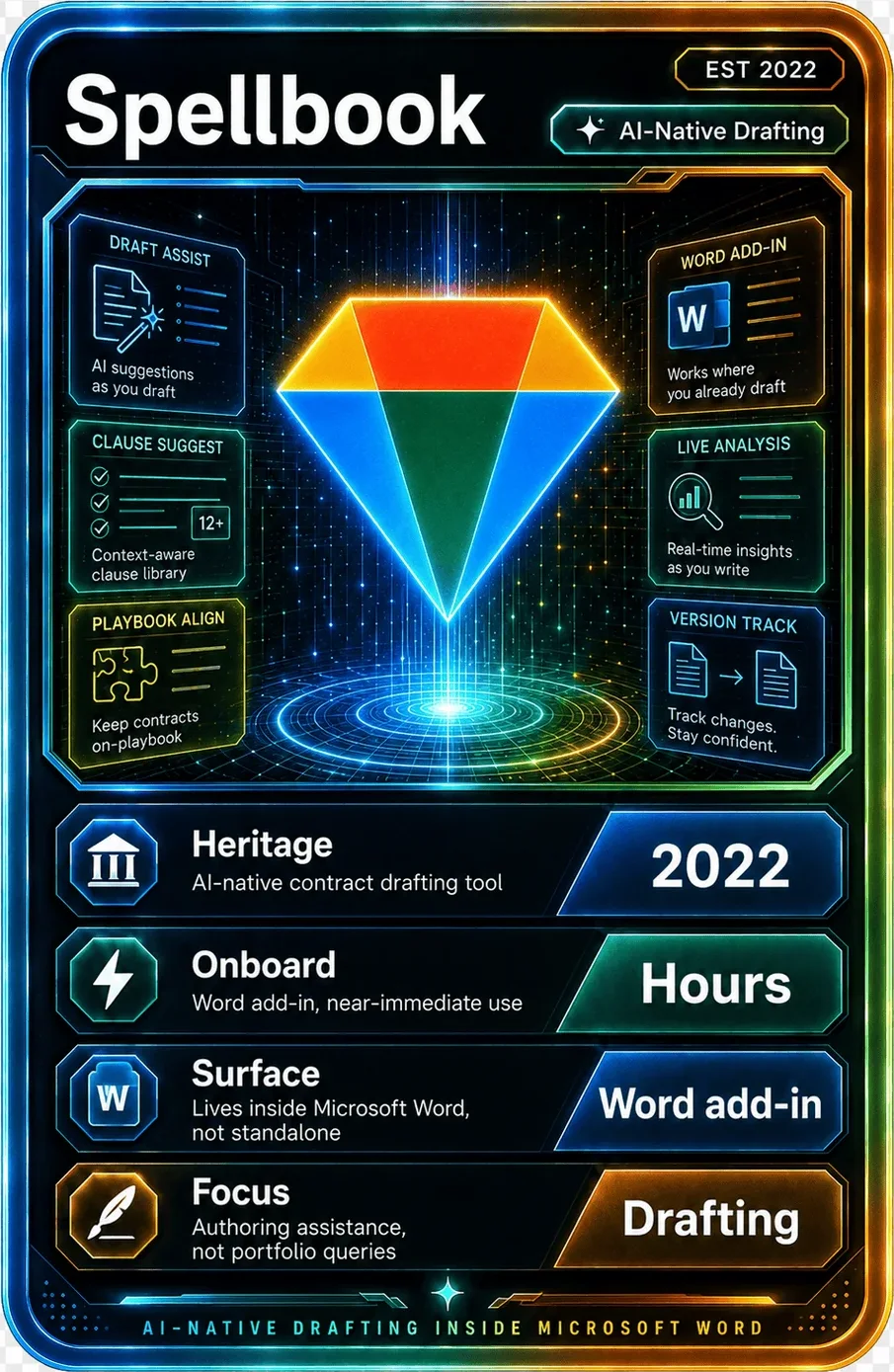
Spellbook is best when a lawyer wants AI help drafting and redlining a contract without leaving Microsoft Word. Vallor is best when procurement, legal, and sales need answers, obligations, and risk across every signed contract in their stack, with citations, on day one.
- Choose Spellbook when the job is drafting and reviewing a single contract in Word before it gets signed.
- Choose Vallor when the job is understanding, monitoring, and acting on the whole contract portfolio after signature.
- Spellbook lives in Microsoft Word for one lawyer. Vallor lives in email, Teams, and Slack for the whole team.
- Spellbook stops at signature. Vallor covers renewals, obligations, vendor risk, and savings leakage post-signature.
- They are not really the same product. Many teams keep Spellbook for drafting and add Vallor for portfolio intelligence.
Side-by-side comparison
| Dimension | Vallor | Spellbook |
|---|---|---|
| Scope | AI coworker that reads every contract, watches systems, answers questions, and triggers follow-up work across the portfolio. Win | AI drafting and review assistant for individual contracts before signature. |
| Where it lives | Email, Microsoft Teams, and Slack, where procurement and legal already work. Win | Inside Microsoft Word as an add-in. |
| Deployment time | First useful answers in minutes from existing repositories and connectors. No implementation project. | Fast to install the Word add-in. Playbooks and Library need setup and precedent tuning to pay off. |
| Post-signature management | Renewals, notice windows, obligations, SLA credits, and vendor risk monitored across the whole portfolio. Win | Stores and indexes executed contracts for search. No obligation tracking, renewal alerts, or portfolio analytics. |
| Integrations | 1,000+ pre-built connectors across ERP, CLM, storage, CRM, AP, email, and collaboration tools. Win | Intake from email, Slack, and Salesforce. Core experience is the Word add-in. |
| AI grounding and citations | Contract-specific reasoning grounded in source agreements, with every answer linked to the clause or record behind it. Win | Built on GPT-5 and Claude. Users report citation issues, including outdated or invented legal authorities. |
| Procurement features | Built for procurement outcomes: renewal exposure, auto-renew traps, price-increase caps, rebates, and spend leakage. Win | Drafting and review aimed at lawyers. No procurement-specific renewal or spend workflows. |
| Primary user | Procurement, legal, finance, and sales teams that need portfolio-wide visibility. | Transactional lawyers and in-house counsel drafting and negotiating documents. |
| Pricing model | Priced to cost a fraction of one FTE, no large implementation services motion. | Per-user, roughly $99 to $350 per seat per month. Enterprise has a 10-seat and 6-month minimum. |
Best-fit profile
Choose Vallor when…
- You need answers across signed contracts spread over CLM, ERP, shared drives, email, and procurement systems, not help drafting one document.
- Procurement owns the pain: missed renewals, auto-renew traps, vendor risk, SLA gaps, and savings leakage.
- You want a coworker in email, Teams, and Slack that the whole team can ask, not a tool only lawyers open in Word.
- You need obligation tracking and monitoring that runs after signature, every day, without someone re-opening the file.
- You want value this quarter and cannot wait for a precedent-library setup or a seat-by-seat rollout.
Choose Spellbook when…
- Your team's main job is drafting and redlining contracts, and you want AI help without leaving Microsoft Word.
- Your lawyers want clause generation, market benchmarking, and a Playbook that redlines the way your GC would.
- You work pre-signature: intake, first-pass review, and negotiation are where the time goes, not portfolio monitoring.
- You want AI to learn from your own precedents and reuse past language inside the document you are editing.
- Word is the system of record for your drafting, and switching your lawyers to a browser tool would slow them down.
How Vallor wins
Drafting tool vs portfolio intelligence
Spellbook accelerates writing and reviewing one contract before signature. Vallor reasons across every signed contract, so a buyer can ask what is about to auto-renew or which vendors have weak liability caps and get an answer with citations.
spellbook.com product pages; Aline Spellbook review (2026).Lives where the team works, not just in Word
Spellbook is a Microsoft Word add-in for the person editing the document. Vallor answers in email, Teams, and Slack, so procurement, finance, and sales can use it without opening a contract file or learning a new app.
spellbook.com; observed Vallor product behavior.Covers the work that happens after signature
Spellbook stores executed contracts for search but does not track obligations, renewals, or run portfolio analytics. Vallor monitors notice windows, renewals, SLA credits, and vendor risk across the whole book of contracts.
Aline Spellbook review (2026); spellbook.com.Grounded answers vs reported citation gaps
Spellbook runs on GPT-5 and Claude, and reviewers report citations to outdated or invented legal authorities. Vallor grounds every answer in the source agreement and links back to the clause or record behind it.
G2 Spellbook reviews; Aline Spellbook review (2026).Most teams do not replace Spellbook with Vallor, they add Vallor next to it. Spellbook is a drafting and review assistant for lawyers working in Word before signature. Vallor is the intelligence layer over every contract after signature. A common setup keeps Spellbook for drafting and redlining, then connects Vallor to the contract repositories, ERP, and shared drives so procurement and legal get renewals, obligations, and risk answers across the portfolio. Start by pointing Vallor at a representative set of signed contracts, compare its first-pass obligation map against your current spreadsheets, then pick one workflow to run on it, usually renewals or vendor risk.
See also
FAQ
Does Vallor replace Spellbook?
Can Spellbook track renewals and obligations?
Is Spellbook only for lawyers?
How much does Spellbook cost?
Which is faster to get value from?
Last updated: 2026-06-10. Part of Vallor's comparison library.
See the difference yourself
Compare Vallor on your own contracts.
Book a 30-minute demo and see how Val reads, redlines, and flags risk, side by side with whatever you run today.